Energy Fight - Dragon Fighters
- 4.6
- Rating
- 5.00M
- Installs
- Free
- Price
 Analysis by App-foxy
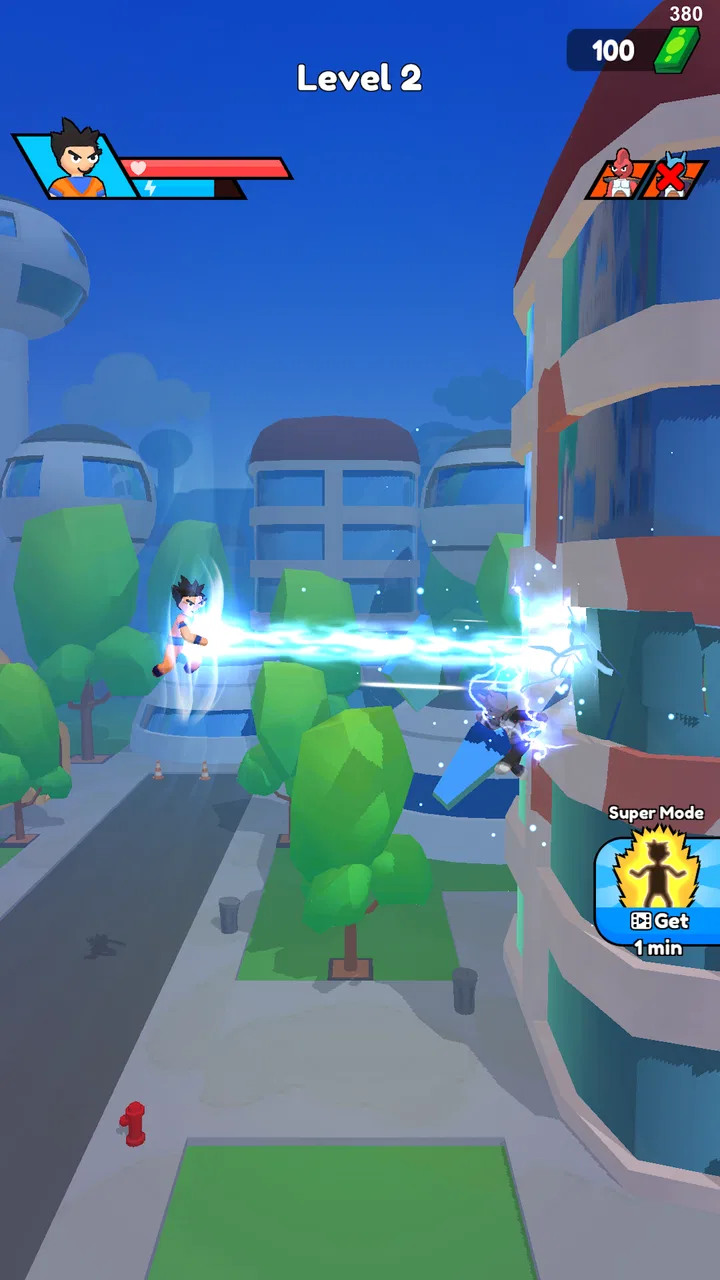
I tried Energy Fight - Dragon Fighters as the sort of quick action game that can live on a shared phone or tablet, and I found its appeal fairly easy to understand. It puts you in battles against shadowy dragon warriors, with movement built around teleporting, blasting, shooting lightning balls, and reacting quickly to threats. That makes it more immediately playable than a slow, story-heavy action title, especially when someone wants a short session rather than a long commitment.
It is a free action game from MOONEE PUBLISHING LTD, available for Android devices running at least Android 7.0. The current version is 2.5.12, and the game carries a Teen content rating. Its store presence is strong, with a 4.6 average from around 21 thousand ratings and more than 5 million installs. Those figures do not guarantee that every player will enjoy it, but they do suggest that the basic combat loop has found a substantial audience.
How it works on a shared household device
The first thing I noticed is that this is the kind of game people can pick up without needing a long explanation. If a family shares a tablet, one person can finish a short attempt and hand it to someone else without requiring a complicated setup ritual. The action is direct enough for a casual player to understand: watch the opponent, move out of danger, and use the available energy attacks at the right moment.
You May Also Like

 Blood Strike: 2.5 Anniversary
Blood Strike’s Loadouts Turn Every Drop Into a Tactical Gamble
A close look at Blood Strike’s custom loadouts: how fast access to signature weapons reshapes its battle royale rhythm, rewards preparation, and narrows the gap between fights.

 Pandora - Music & Podcasts
Pandora’s Music Is Easy to Start, but Harder to Recover
Pandora’s strength is its low-effort path from a seed to a station. Its weak spot is how much confidence it asks you to place in connection, setup, and quiet recovery.

 8 Ball Pool
 Is Built on Rivalries, Rematches, and Routine
A close look at the rivalries, rematches, shared routines, and unanswered safety questions that turn a quick pool match into a persistent mobile community.

 Samsung Music
’s Quiet Strength Is Playing What You Already Own
Its reach comes less from spectacle than from dependable access to a personal library. That simplicity is both the app’s strongest retention engine and its ceiling.

 AccuWeather: Weather Radar
AccuWeather Review: A Quick, Clear Forecast for Everyday Decisions
For everyday plans, the best forecast is the one you can understand quickly. AccuWeather makes rain timing, radar, and local conditions easy to act on, with a few trade-offs.

 Hill Climb Racing
Why Hill Climb Racing Still Turns Crashes Into One More Run
A tiny car, a bumpy hill and one more upgrade: Hill Climb Racing keeps resurfacing because its simple chaos makes every near-miss feel personal.
More From Our News Desk



That simplicity is useful in an everyday situation. Imagine waiting for dinner to finish, sitting in a living room while another person watches television, or passing a device between siblings during a short break. Energy Fight fits those moments better than an expansive role-playing game that expects everyone to remember a large inventory, a quest chain, and several control layers. I would be more comfortable recommending it for shared, occasional play than for a household looking for one large game that everyone plays together at the same time.
There is an important distinction here: shared use is not the same as shared progress. I would not assume that two people can maintain separate heroes or separate advancement simply because the game is installed on one device. Before treating it as a family game, I would decide whose play session the device is intended to support and avoid making changes to progress or purchases casually. That boundary matters more than the fighting itself when several people use the same screen.
The combat style also affects who will enjoy taking turns. The game’s teleporting and projectile attacks make each attempt feel active rather than passive. A younger player may enjoy the visible energy effects, while an older player may focus on timing and positioning. However, someone who dislikes repeated battles or prefers a calm puzzle experience may find the constant action tiring. The Teen rating is worth taking seriously when choosing whether it belongs on a child’s shared device.
What I would settle before handing over the device
My practical advice is to establish a simple household rule before anyone begins: decide who is playing, whether progress may be changed, and whether purchases are allowed. The game is free to download, but it includes optional in-app purchases ranging from $0.99 to $99.99 per item. That is a wide enough range that I would not leave a shared device unattended with an unrestricted payment method attached to it.
This is not a criticism unique to this title; it is a basic part of using free-to-play games responsibly. Still, Energy Fight’s quick, exciting combat can encourage “just one more try” behavior, which makes clear boundaries useful. On a personal device, I can manage that myself. On a family tablet, I would make the payment decision explicit and keep the game’s purchase responsibility with the account holder.
I would also avoid promising a child that the game is suitable simply because it is easy to control. The Teen label indicates that the age context is part of the decision. A parent or guardian should look at the game’s presentation and decide whether the fantasy fighting fits the child using the device. The dragon-warrior theme is fictional, but the overall experience is still built around combat, energy attacks, and defeating opponents.
For adults sharing a device, the boundary is simpler. I would treat it as a turn-based activity in the ordinary sense: one person plays, then gives the device back without changing settings or spending money. That approach works well because the game does not need to become a household project. It can remain a small action diversion, provided everyone agrees on how progress and purchases are handled.
Coordination matters more than the controls suggest
Although the game is easy to start, coordination can improve the experience considerably. I found it useful to think of each battle as a short sequence of decisions rather than as nonstop button pressing. Teleporting is most valuable when it creates space from an incoming threat, while lightning-ball attacks are better used when I have a clear opportunity instead of firing automatically whenever the option appears.
That small change in mindset is one of the game’s less obvious strengths. A beginner can enjoy the spectacle, but a more patient player can try to read the opponent and avoid wasting movement. On a shared device, this creates a natural way for experienced players to help newcomers without taking over. Instead of grabbing the screen and completing the fight, I would explain one decision at a time: move first when danger is obvious, then attack when the opening appears.
This also gives the game a useful role in a household where players have different skill levels. The experienced person can demonstrate timing, while the newer player still controls the character. That is more satisfying than watching someone else play the entire session. It also reduces frustration because the advice stays focused on the immediate battle rather than turning into a long lecture about advanced mechanics.
I would not describe the game as a cooperative multiplayer experience based on the information available in its presentation. My recommendation is therefore about taking turns and sharing advice, not about assuming that two people can fight side by side. If simultaneous teamwork is the main reason you want an action game, a title designed specifically around co-op play would be a better choice.
Another useful habit is to give each player a consistent session length, even if that limit is informal. Fast action games can make time disappear, and shared devices often create arguments when one person keeps extending a turn. A simple rotation avoids that problem. Energy Fight’s format suits this arrangement because its central attraction is the battle itself, not a household-wide schedule of tasks that everyone must complete in order.
Age, trust, and the feel of the action
The Teen content rating should shape how I recommend this game. I would not present it as a children’s game merely because its controls are approachable. The fantasy setting may be colorful and energetic, but the core activity remains fighting dragon shadow warriors with powerful attacks. For a teenager or adult who enjoys animated combat, that premise is straightforward. For a younger child, the right decision depends on the family’s own standards and supervision.
Trust also involves spending. Because the game is free to start and offers in-app purchases, I would keep the financial side separate from the excitement of a battle. A shared device should have a clear rule that nobody buys anything without permission. If several people use the same account, that rule becomes especially important because the person playing may not be the person responsible for the payment method.
I also think the game is better suited to players who can accept repetition. Action games built around battles often depend on trying again, improving reactions, and learning from a failed attempt. That can be rewarding, but it is not the same as a game that constantly introduces new forms of play. If someone in the household wants a relaxing experience with no pressure to react quickly, I would choose a puzzle, simulation, or turn-based alternative instead.
On the other hand, the directness is a genuine advantage for older players who do not want to study a complicated system. The store summary emphasizes teleporting, blasting, and lightning attacks, and those ideas describe the game’s immediate identity well without requiring a large amount of background knowledge. I could hand it to a friend who likes action games but has not followed a particular franchise and expect them to understand the basic appeal quickly.
Where it stands beside familiar action-game alternatives
Compared with a traditional platform action game, Energy Fight appears more focused on combat encounters than on careful exploration. That makes it easier to fit into a short break, but it may feel less satisfying to someone who wants secrets, jumping challenges, or a large world to investigate. Compared with a role-playing game, it asks for less commitment to character management, but it also offers less reason to become attached to a broad narrative or a detailed party.
It occupies a middle ground between an arcade-style action distraction and a more structured combat game. The teleporting gives movement a distinctive role, while the energy attacks provide immediate visual feedback. In my experience, that combination is strongest when I want a burst of activity and weakest when I am looking for a deep, slow-building strategy experience.
The free entry point is another reason it can compete with paid action games for casual attention. I can try the central idea without paying at the start, which lowers the risk for someone who is unsure about the style. The trade-off is that the optional purchase range means I would evaluate the game not only by its opening appeal but also by how comfortable I am with its monetization on the device I use.
I would choose this game over a large action role-playing title when the priority is quick access and uncomplicated combat. I would choose the larger alternative when I want exploration, a stronger long-term story, or a more elaborate progression structure. I would also choose a dedicated multiplayer action game when the household wants genuine simultaneous participation rather than passing one device from person to person.
Small habits that make the battles easier to enjoy
My first tip is to resist treating teleporting as a panic button that should be used constantly. Its value comes from changing position with purpose. If I trigger movement without considering where the opponent is or where I want to attack from, I may avoid one danger and create another awkward situation. Watching the battle for a moment before moving makes the action feel more controlled.
My second tip is to separate movement practice from attack practice. When introducing the game to a new player, I would first let them concentrate on staying safe and recognizing when an opponent is threatening them. Once that feels natural, I would add lightning-ball attacks. This two-step approach is more helpful on a shared device than immediately telling someone to use every ability at once.
Third, I would use the game as a short-session activity rather than promising a complete evening of entertainment. That expectation matches its quick combat focus and makes repetition less noticeable. If I find myself continuing only because I am annoyed by a defeat, I would stop and return later. Action games are more enjoyable when another attempt feels like a choice, not an obligation.
Fourth, I would keep household progress and spending decisions visible to the person who owns the device. Even without assuming anything about account systems, that is a sensible workflow: one person manages installation and purchases, while other players receive permission to play. It prevents a casual turn from becoming an accidental change to the device or the game’s progression.
Finally, I would judge the game by the kind of attention it asks for. It can be a good fit when I have enough focus to react to attacks and choose when to move. It is a poor fit when I am trying to multitask, because the action depends on noticing what is happening rather than tapping absent-mindedly. That is a useful distinction for anyone considering it as a waiting-room or commute game.
Who should install it, and who should skip it?
I recommend Energy Fight to teenagers and adults who enjoy compact fantasy combat, quick reactions, and flashy energy attacks. It is particularly suitable for someone who wants to try an action game without committing to a large campaign immediately. The substantial audience and 4.6 average suggest that its basic formula connects with many players, and I can see why: the concept is easy to grasp, while teleporting gives the fights a little more personality than simple standing-and-shooting.
I would also recommend it for a shared household device when the family understands that it is a turn-taking game rather than an assumed co-op game. The best arrangement is one where the account holder controls purchases, the Teen rating is appropriate for everyone using it, and players agree not to overwrite or alter one another’s progress casually.
I would skip it if I wanted a quiet game, a rich exploration experience, or a clearly cooperative adventure. I would also hesitate if repeated combat makes me lose interest quickly. The free price is helpful for testing, but the presence of in-app purchases means I would not install it on a shared device without first deciding how spending will be handled.
Device compatibility is reasonably broad for Android users because the minimum requirement is Android 7.0, though actual comfort can still depend on the particular phone or tablet. I would consider screen size and responsiveness before choosing a very old shared device for it. A larger screen may make the action easier to follow, while a cramped or sluggish device could undermine the timing that gives the battles their appeal.
The developer, MOONEE PUBLISHING LTD, has positioned this as a focused action game rather than a complicated genre hybrid. That clarity helps me make a decision quickly. I know I am installing it for battles built around movement and energy attacks, not for a broad collection of unrelated activities.
My household verdict
After spending time with it, I see Energy Fight as a lively, accessible action game that works best in controlled bursts. Its strongest qualities are the immediate combat premise, the satisfying contrast between teleporting and projectile attacks, and the ease with which a new player can understand what to do. It is more approachable than a deep role-playing game and more active than a passive time-filler.
Its limitations are just as important. The Teen rating makes it unsuitable as an automatic choice for younger children, the free-to-play structure requires responsible purchase boundaries, and I would not assume that sharing one device means sharing one progression system. Players who need co-op, exploration, or a peaceful pace should look elsewhere.
For my own recommendation, I would install it on a personal or carefully managed shared Android device, give each player a clear turn, and treat purchases as the account holder’s decision. If that arrangement sounds reasonable, the game is worth trying because the download costs nothing at the start and the action gets to its point quickly. My main advice is to choose it for focused, short combat sessions—not as a universal family game.
With its Teen rating, broad Android compatibility, current version 2.5.12, and optional purchases, it deserves a little thought before being placed on a household tablet. But for the right player, the combination of teleportation, lightning attacks, and dragon-shadow battles offers a direct and energetic way to fill a spare moment. I would recommend it to action fans who value immediacy, while being clear that a different game will be better for shared campaigns, co-op teamwork, or deeper adventure.
FAQs for Energy Fight - Dragon Fighters
01What is Energy Fight - Dragon Fighters?
Energy Fight - Dragon Fighters is an action-fighting game centered on powerful martial artists, energy attacks, and dramatic battles inspired by classic anime-style combat. Players choose fighters, improve their abilities, and face opponents through different challenges. The game is designed for users who enjoy fast matches, special moves, character progression, and flashy effects rather than a slow or realistic fighting experience.
02How does the gameplay work in Energy Fight - Dragon Fighters?
The gameplay generally combines simple controls with fast-paced combat. You guide your fighter, attack opponents, defend against incoming hits, and activate energy-based skills at the right moment. Winning battles usually depends on learning each character’s abilities, managing attack timing, and upgrading your fighter. New players should expect a straightforward system, although later opponents may require better strategy and preparation.
03Can I play Energy Fight - Dragon Fighters offline?
Some parts of Energy Fight - Dragon Fighters may be available without a constant internet connection, particularly basic single-player battles or previously loaded content. However, online access may still be required for advertisements, updates, account-related features, event content, rewards, or other connected services. Availability can vary by version and device, so it is best to test the game offline after installation rather than assuming every mode works without internet.
04Does Energy Fight - Dragon Fighters include in-app purchases or advertisements?
As with many free-to-download mobile fighting games, Energy Fight - Dragon Fighters may include advertising and optional in-app purchases. These can potentially provide extra currency, faster progression, character improvements, or other bonuses. You should review the store listing and the purchase settings on your device before playing, especially if children will use the app. Avoiding purchases may make progression slower, but it should not automatically prevent you from trying the core gameplay.
05What devices are suitable for Energy Fight - Dragon Fighters?
Energy Fight - Dragon Fighters should run best on a relatively recent Android or iOS device with enough free storage and updated system software. Because the game uses animated combat, visual effects, and repeated action scenes, older phones may experience slower loading, reduced frame rates, or occasional crashes. Before downloading, check the official store requirements, keep additional storage available, and close demanding background apps for a smoother experience.
Pros
- Fast-paced battles are easy to learn but still reward precise timing.
- Playable fighters offer varied attack styles and combat strategies.
- Short matches fit well into quick gaming sessions.
- Dragon-themed visuals give the game a distinctive fantasy atmosphere.
- Progression systems provide goals beyond simply winning individual fights.
Cons
- Some upgrades may require considerable grinding to unlock.
- Combat can feel repetitive after extended play sessions.
- The interface may feel crowded on smaller phone screens.
- Online features can be affected by connection quality and latency.
- New players may need time to understand each fighter’s abilities.

Energy Fight - Dragon Fighters
Gallery